The Complete Guide to Security Camera Placement
James Wilson
Nov 22, 2023
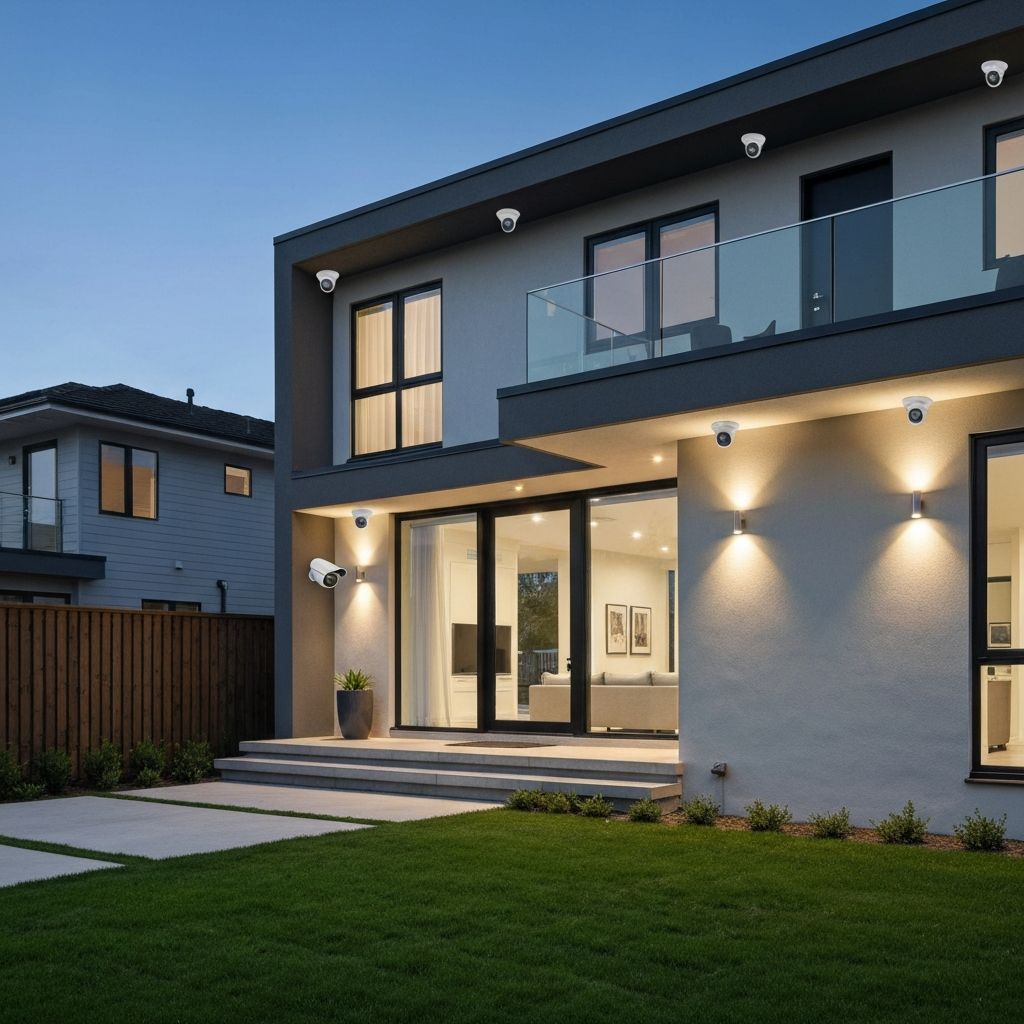
A security camera is only as effective as its placement. You could install the most advanced 4K camera available and still have significant blind spots if it's positioned incorrectly. Thoughtful placement maximizes deterrence, coverage, and evidence quality -- the three pillars of an effective camera strategy. This guide walks through the principles and specific locations that security professionals use when designing residential systems.
Start With a Threat Assessment
Before mounting a single camera, walk the perimeter of your property and think like a burglar. Which entry points are least visible from the street? Where could someone approach your home unseen? Identify natural approach routes, poorly lit areas, and secondary access points like side gates and back doors. This assessment forms the foundation of your placement strategy.
Statistically, most residential break-ins occur through the front door (34%), first-floor windows (23%), and back doors (22%). Your camera coverage should prioritize these entry points, with secondary coverage of garages, side entrances, and any areas concealed by landscaping or fencing.
Front Door Coverage
Your front entrance deserves dedicated coverage from a camera mounted at 8 to 10 feet -- high enough to avoid tampering, low enough to capture clear facial detail. The camera should have a field of view that covers the door itself, the porch area, and the approach path from the driveway or street. A video doorbell provides excellent close-range supplementary coverage and serves as a visible deterrent.
Driveway and Garage
Vehicle theft and garage entry are consistently underprotected. A wide-angle camera positioned at the corner of your home can capture the entire driveway, the garage door, and the street approach in a single frame. For homes with detached garages, a dedicated camera at the garage entrance is worth the additional investment.
Back Yard and Rear Entry
Rear entries are favored by burglars precisely because they're concealed from public view. Mount cameras at the back corners of your home rather than directly above the door -- corner placement captures wider coverage and is harder to tamper with. If you have a pool, deck, or fence line, include those in your rear coverage plan.
Interior Placement
Interior cameras provide a secondary layer of evidence if an intruder bypasses exterior cameras. The most valuable indoor positions are the main staircase (captures movement between floors), the primary living area (broadest interior coverage), and any room housing high-value items. Point cameras toward entry points rather than interior walls -- you want to capture the moment of entry, not the room itself.
Angle, Height, and Lighting
Cameras mounted too high capture top-of-head footage -- useful for detection but poor for identification. The ideal mounting height for facial capture is 8 to 10 feet, with the camera angled slightly downward. Avoid mounting cameras directly facing bright light sources like the sun or street lamps, which can wash out footage. Look for cameras with wide dynamic range (WDR) technology for challenging lighting conditions.
Visibility vs. Concealment
Visible cameras provide deterrence -- a significant portion of burglars report that visible security cameras influenced their decision not to target a property. However, concealed cameras provide a backup layer of evidence that can't be disabled by a determined intruder. The optimal strategy is a combination: prominent cameras at key entry points for deterrence, with less visible cameras covering interior spaces and secondary angles.
Professional Design Makes a Difference
Our installation team at Safe Wall Systems conducts a comprehensive site survey before placing a single camera. We map blind spots, test angles, assess lighting conditions, and design a camera layout that provides complete coverage without redundancy. Call (855) 226-3393 to schedule your free security assessment.